Rathbones
Rathbones Group is a leading wealth and asset management provider undergoing a strategic transformation to become a digitally enabled, data-driven organisation. Central to this ambition is a commitment to placing client experience (CX) at the core of its services and platforms.
As part of this transformation, I was engaged to establish a scalable, enterprise-grade design system to support consistent, high-quality digital product delivery across the organisation.
Problem
Rathbones was working with multiple external vendors, each utilising a limited and inconsistently applied pattern library. This resulted in fragmented user experiences, with screens designed in isolation and little adherence to UX best practices.
The absence of a unified design approach led to inconsistencies across the platform, inefficiencies in delivery, and an increased risk of design and usability issues.
My objective was to evolve the existing pattern library into a robust, scalable design system that would standardise design practices, improve consistency, and support cross-team collaboration.
Process
I adopted a structured, design-system-led approach, leveraging and refining the existing pattern library as a foundation.
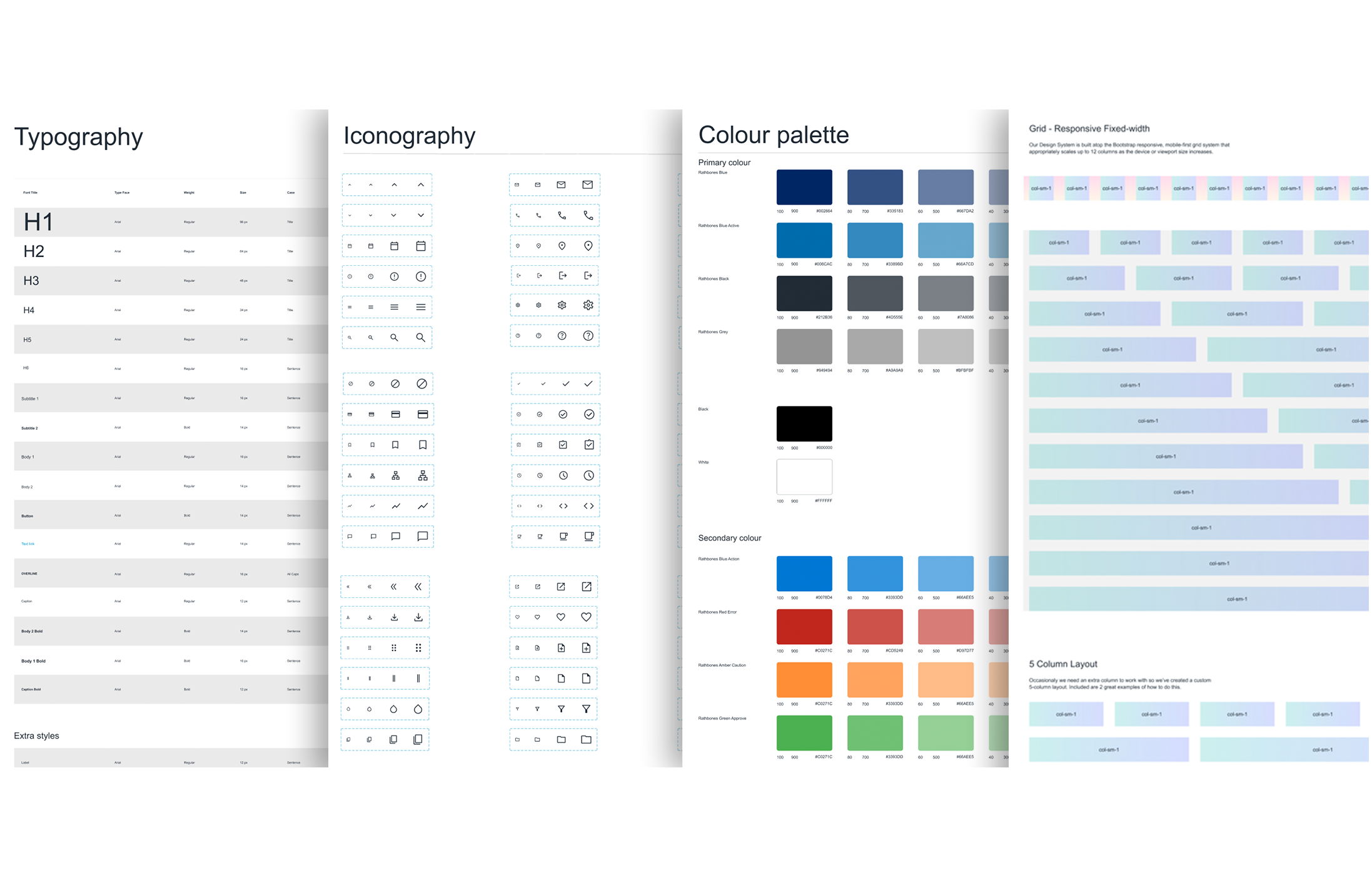
Using Atomic Design methodology, I prioritised the development of foundational elements (“Atoms”), including typography, colour, iconography, and grid systems, ensuring full alignment with Rathbones’ brand guidelines.
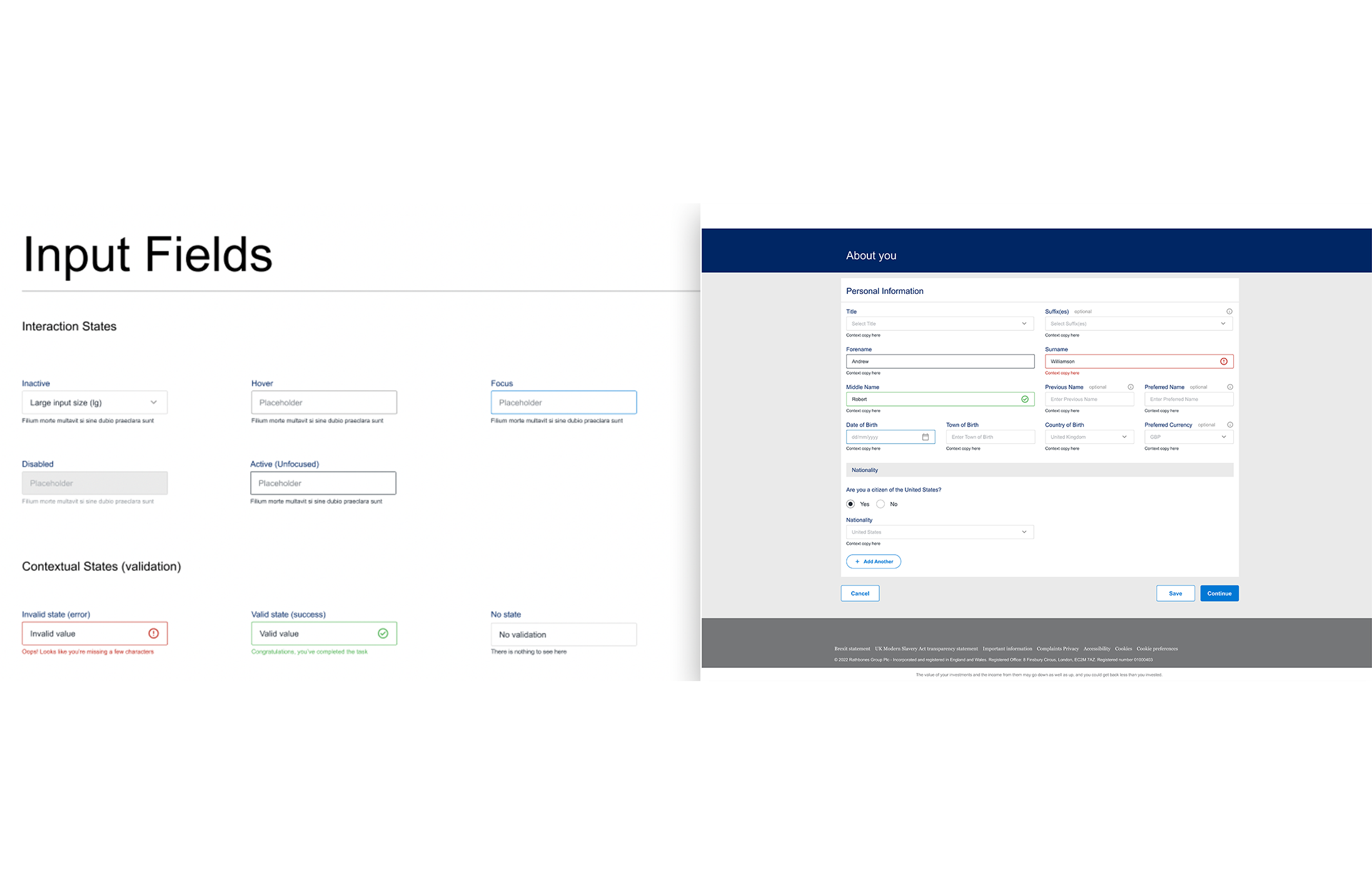
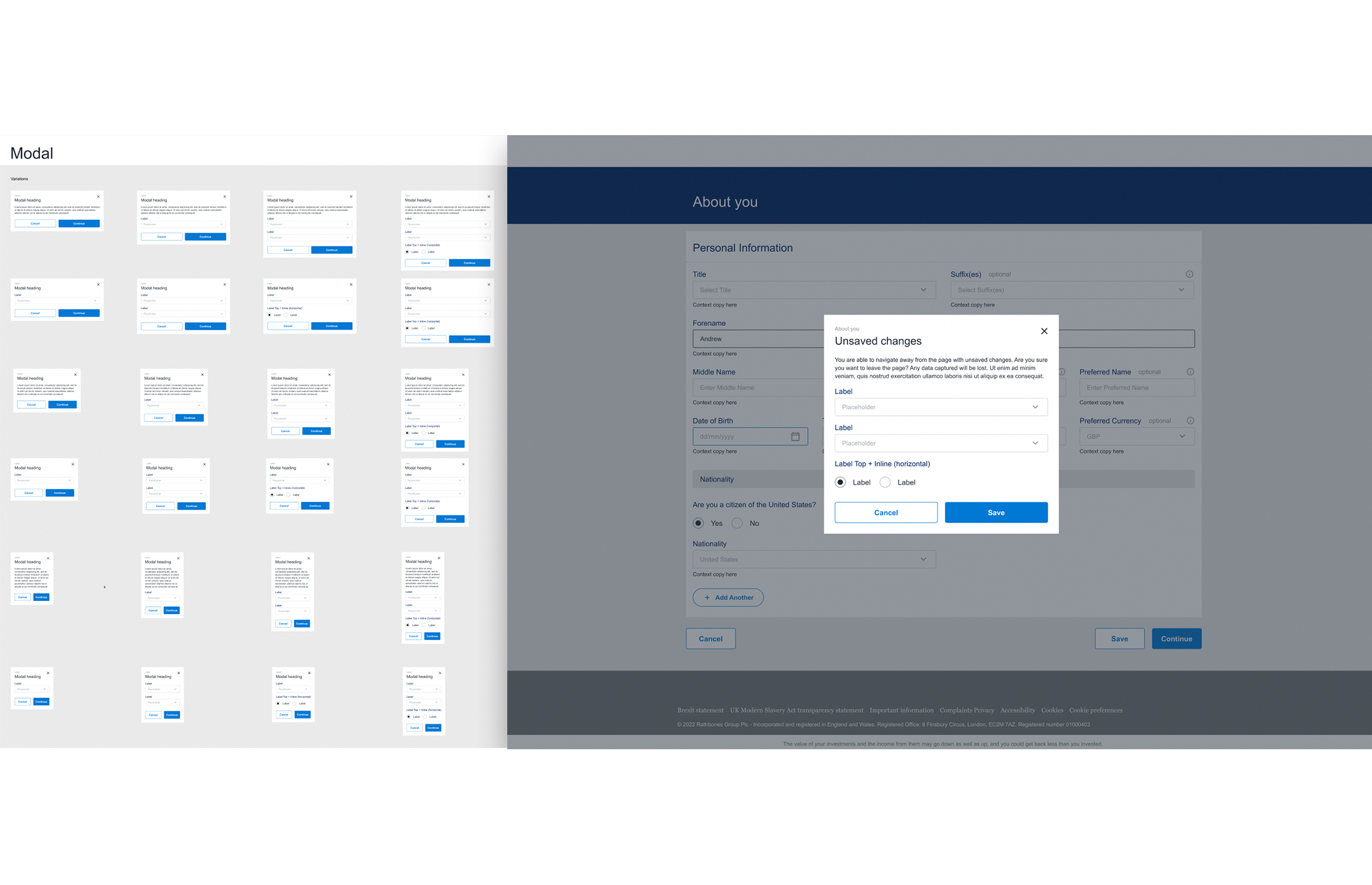
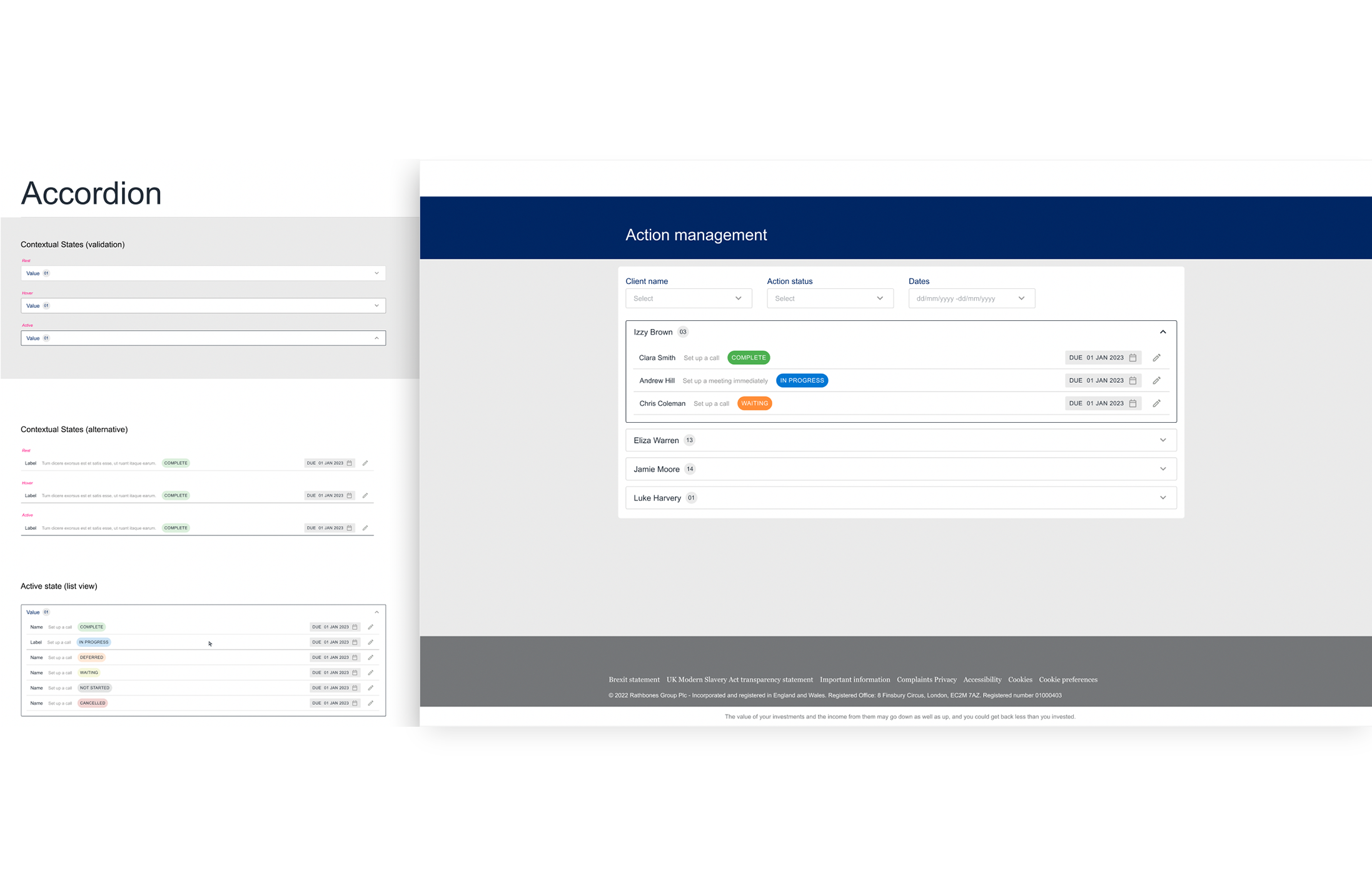
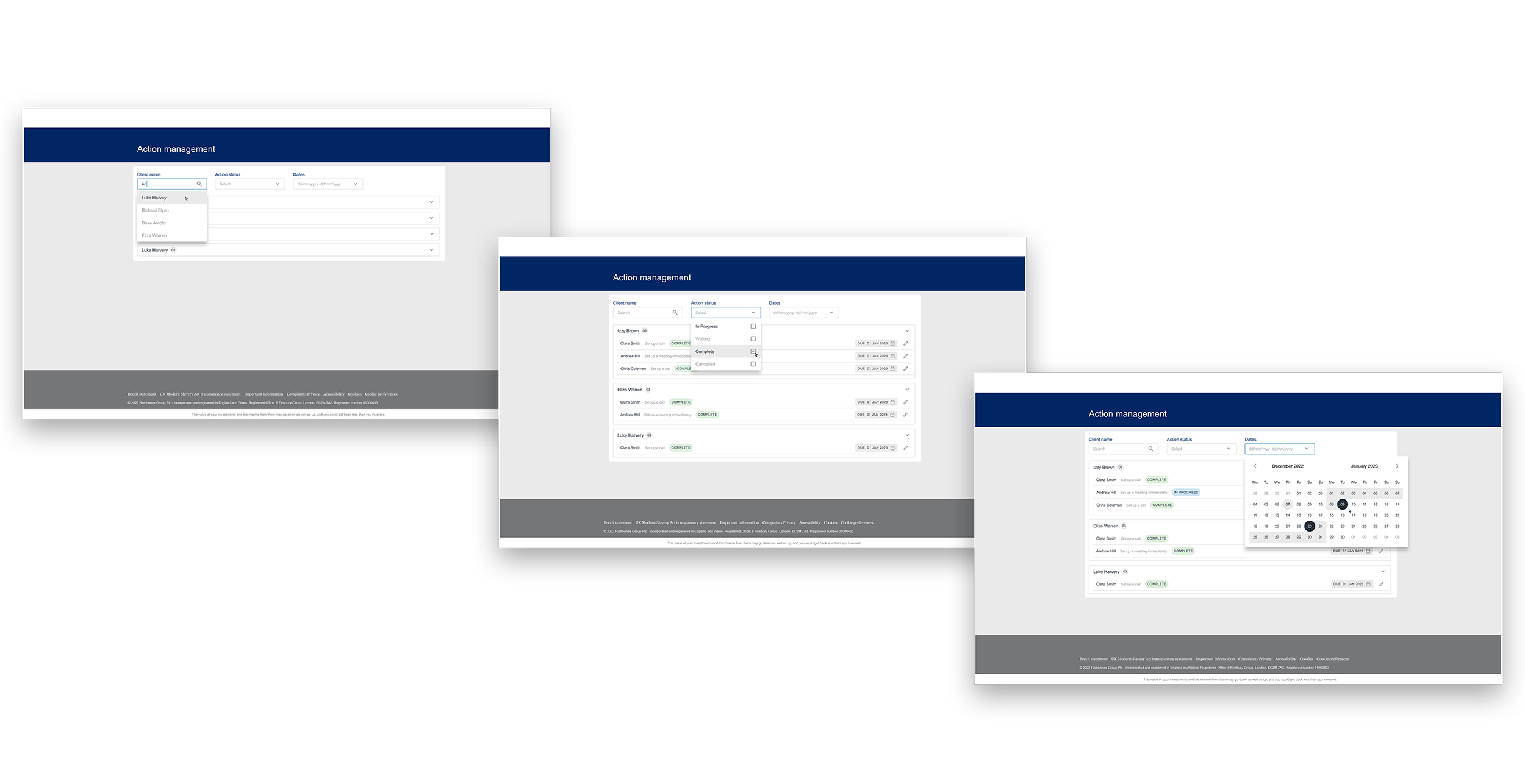
From this foundation, I progressed to designing “Molecules” (e.g. dropdowns, tables, cards, accordions), carefully considering how components would function within the broader ecosystem rather than in isolation. Iterative design reviews were embedded throughout to validate usability, scalability, and alignment with platform needs.
This approach ensured a cohesive and extensible system, capable of supporting current requirements while scaling for future product evolution.
Implementation
By defining and prioritising a core set of components, I was able to create a clear delivery roadmap and focus on establishing the foundational layer of the design system.
Dedicated time investment was critical, allowing for rapid development of high-quality, reusable components. While I also contributed to Information Architecture and QA activities, the design system represented the most strategically impactful deliverable, with long-term value for the organisation.
Findings
By defining and prioritising a core set of components, I was able to create a clear delivery roadmap and focus on establishing the foundational layer of the design system.
Dedicated time investment was critical—allowing for rapid development of high-quality, reusable components. While I also contributed to Information Architecture and QA activities, the design system represented the most strategically impactful deliverable, with long-term value for the organisation.
Conclusion
Building the design system on top of an existing pattern library accelerated delivery, enabling rapid refinement and alignment with updated brand and UX standards.
Through clear prioritisation and structured delivery, the design system established a strong foundation for Rathbones to take ownership of its digital product design.
The outcome is a scalable system that:
Ensures consistency across all digital touchpoints
Improves efficiency and speed of delivery for design and development teams
Enables reusable, governed components aligned to best practice
Supports Rathbones’ broader ambition of delivering a best-in-class client experience