Neureka
Neureka is a mobile application designed to engage users through brain games and cognitive challenges while contributing to large-scale neuroscience research. Built on a citizen science model, the platform enables continuous data collection to support advancements in brain health, including dementia and mental health research.
With traditional neuroscience studies often limited by small sample sizes and short timeframes, Neureka’s core ambition was to drive sustained user participation at scale—creating a reliable, longitudinal data source to support emerging techniques such as machine learning.
My role focused on improving the end-to-end user experience, from onboarding through to gameplay, with the objective of increasing accessibility, reducing friction, and strengthening long-term engagement.
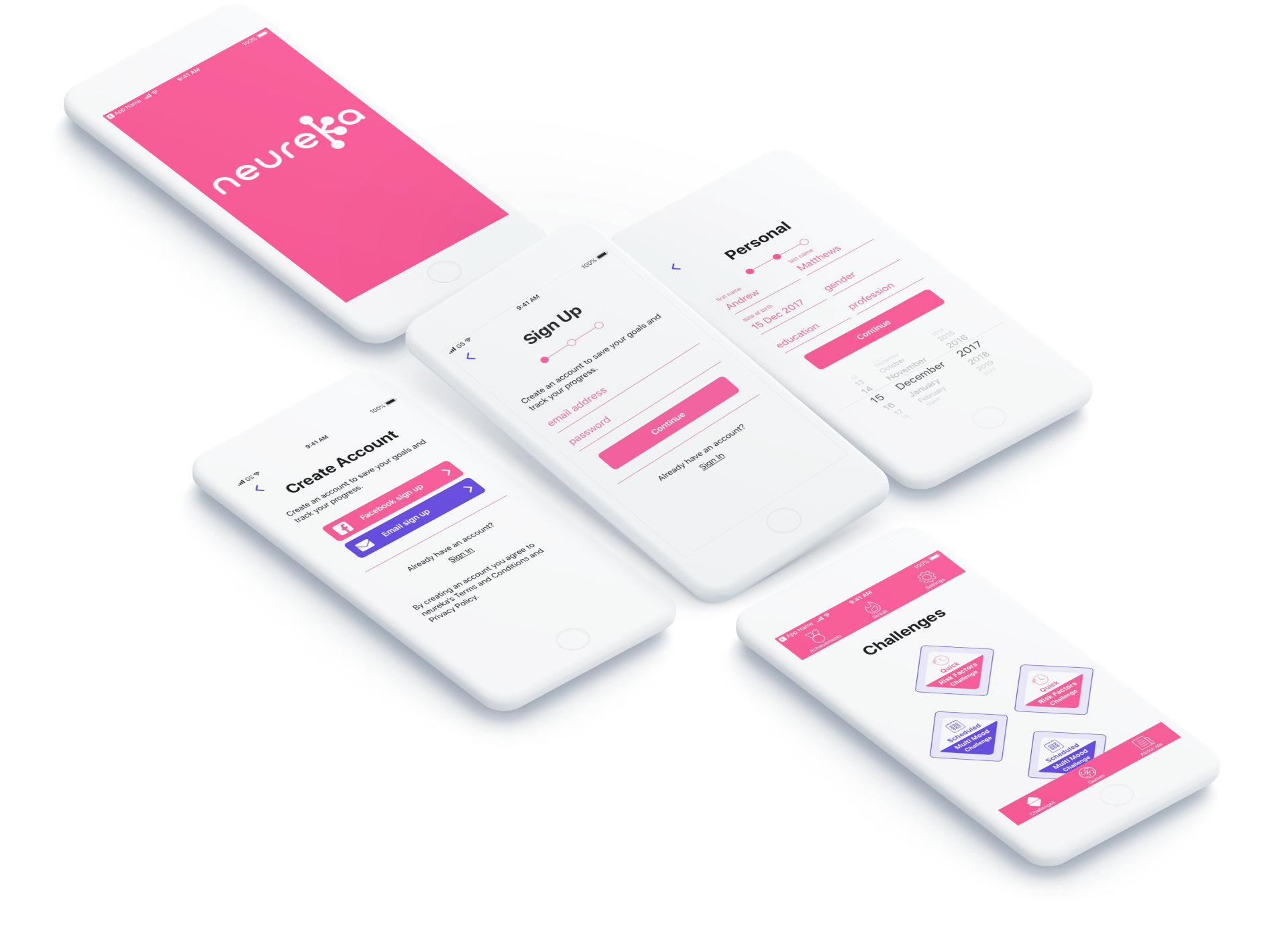
Prototype
The Challenge
While the concept was compelling, the early product experience introduced significant barriers to entry:
A complex and lengthy onboarding process led to early user drop-off
Over-instructional gameplay, with multiple tutorial screens delaying engagement
Unclear value exchange, making it difficult for users to understand their contribution to research
Inconsistent UX patterns across screens, impacting usability and flow
The challenge was to transform a functional but fragmented experience into one that felt intuitive, engaging, and purpose-driven, encouraging users to return over time.
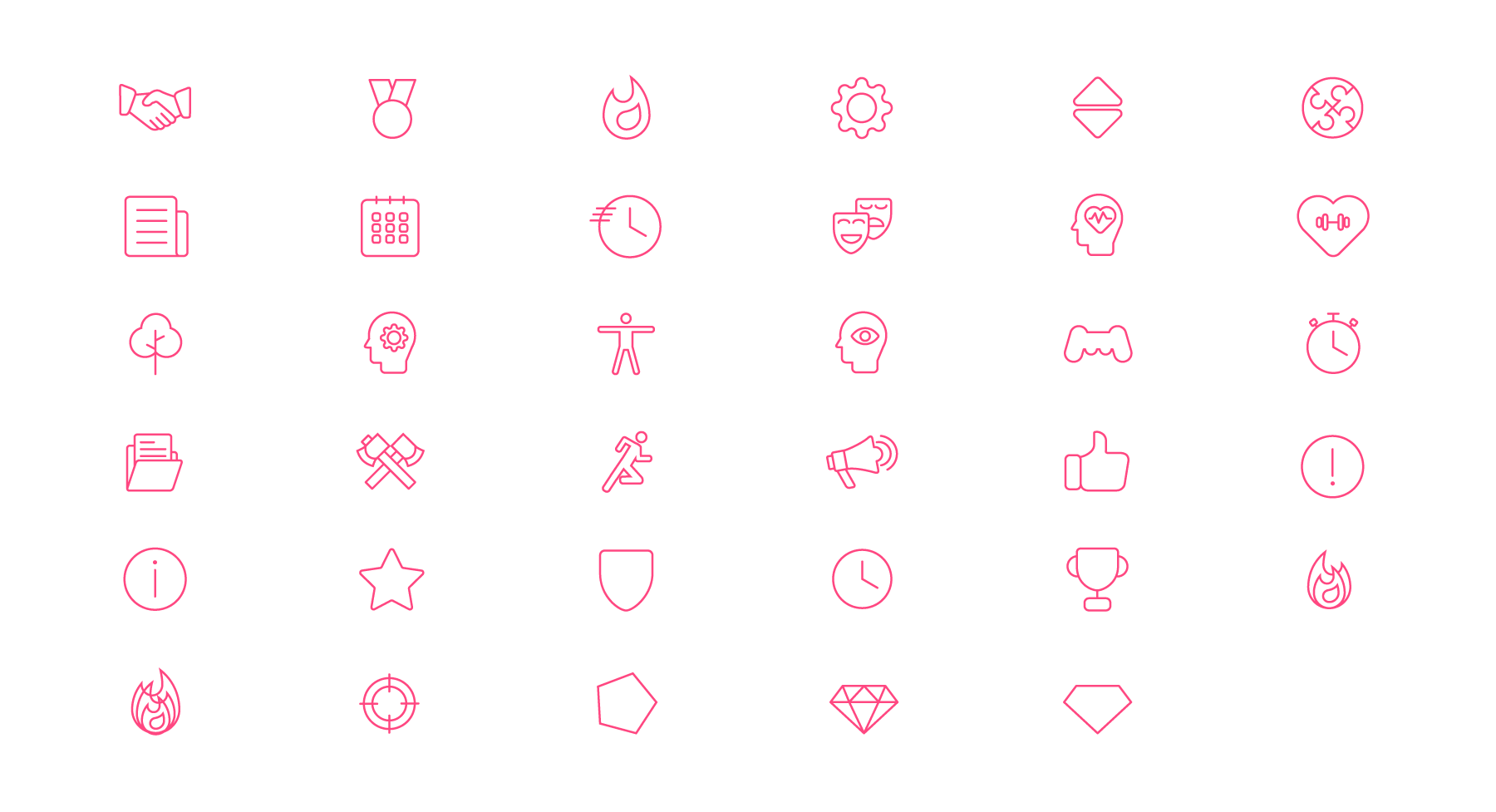
Iconography
Process
I adopted a research-led, iterative design approach, combining user testing, journey mapping, and rapid prototyping:
Conducted usability testing sessions to identify friction points across onboarding and gameplay
Mapped end-to-end user journeys to understand drop-off moments and engagement gaps
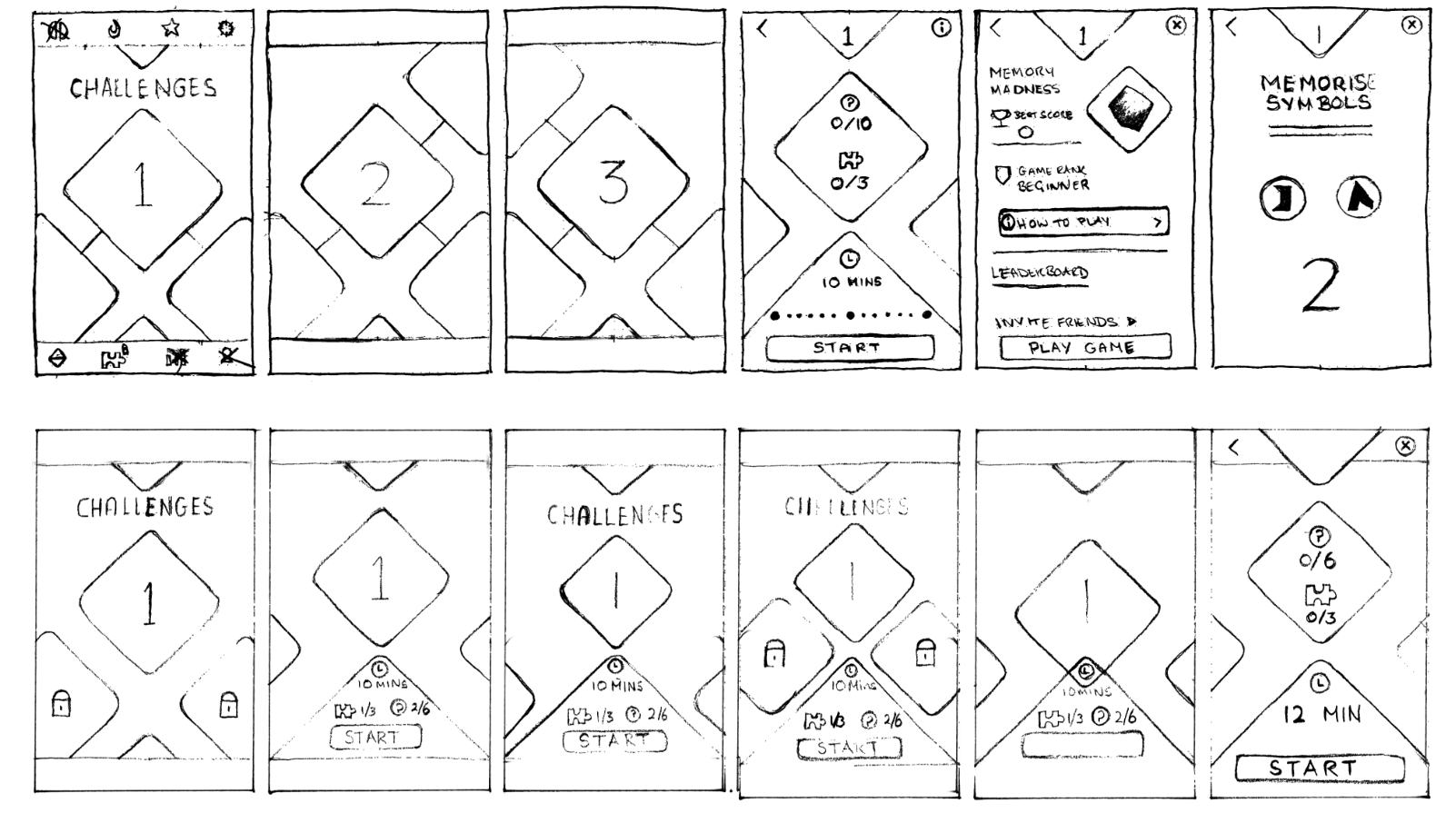
Developed low-fidelity scamps to reframe core interaction patterns and navigation structure
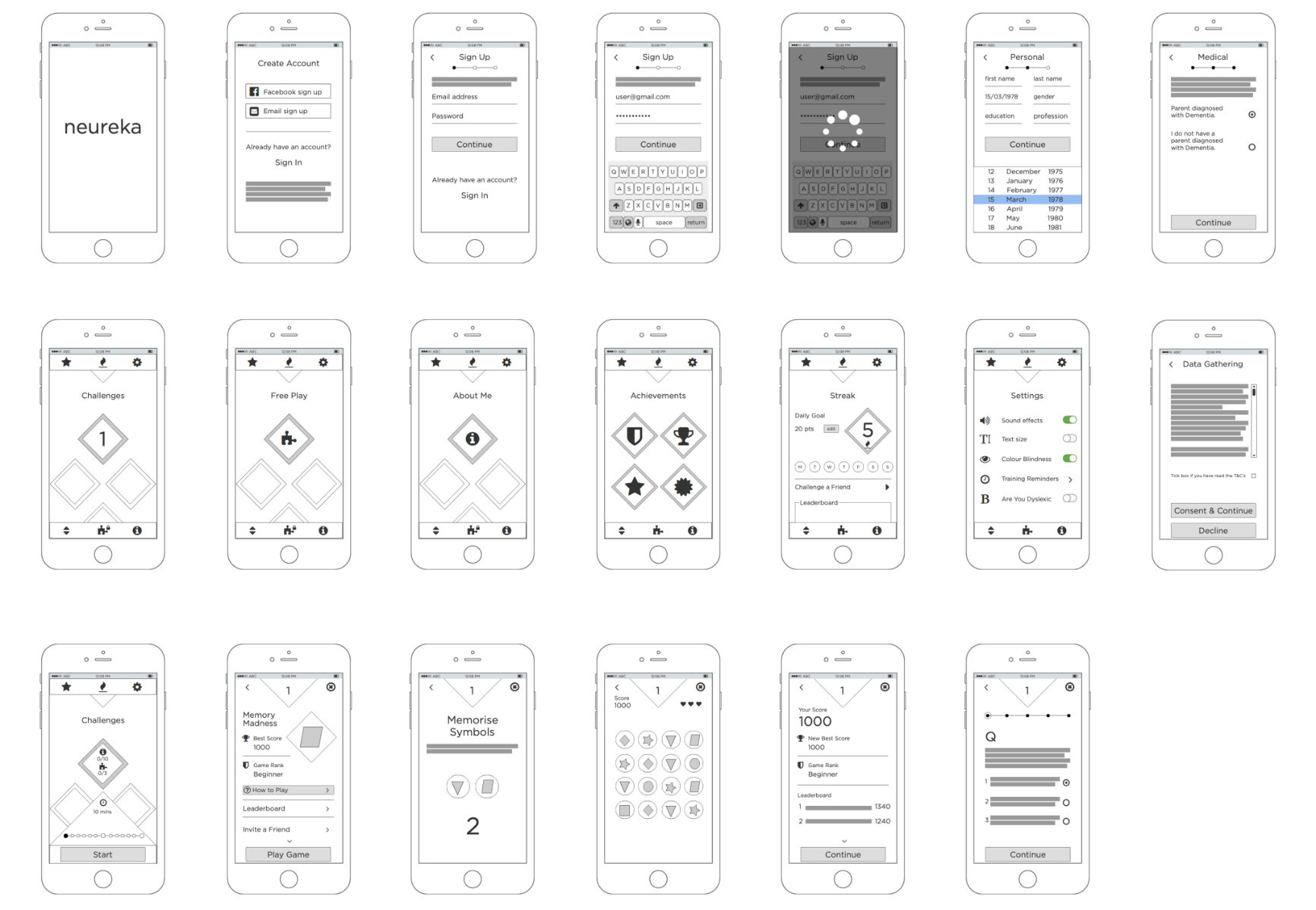
Progressed to wireframes and high-fidelity prototypes to validate improvements with stakeholders
Ensured alignment between UX, visual design, and behavioural motivation principles
This approach allowed for continuous validation while evolving the experience toward simplicity and clarity.
Key Design Improvements
1. Streamlined Onboarding
Reduced the number of steps and removed unnecessary screens, enabling users to access the core experience faster and with less friction.
2. Faster Path to Value
Minimised instructional overhead within gameplay, allowing users to engage with challenges almost immediately while learning through interaction.
3. Clearer Information Architecture
Introduced a simplified navigation model, with primary actions surfaced prominently through intuitive top and bottom navigation patterns.
4. Simplified Communication
Refined messaging within the ‘Challenges’ experience to clearly communicate time commitment and user contribution, reducing cognitive load and uncertainty.
5. Cohesive Visual Language
Established a clean, approachable interface using a vibrant colour palette, soft shapes, and consistent UI patterns to balance scientific credibility with accessibility.
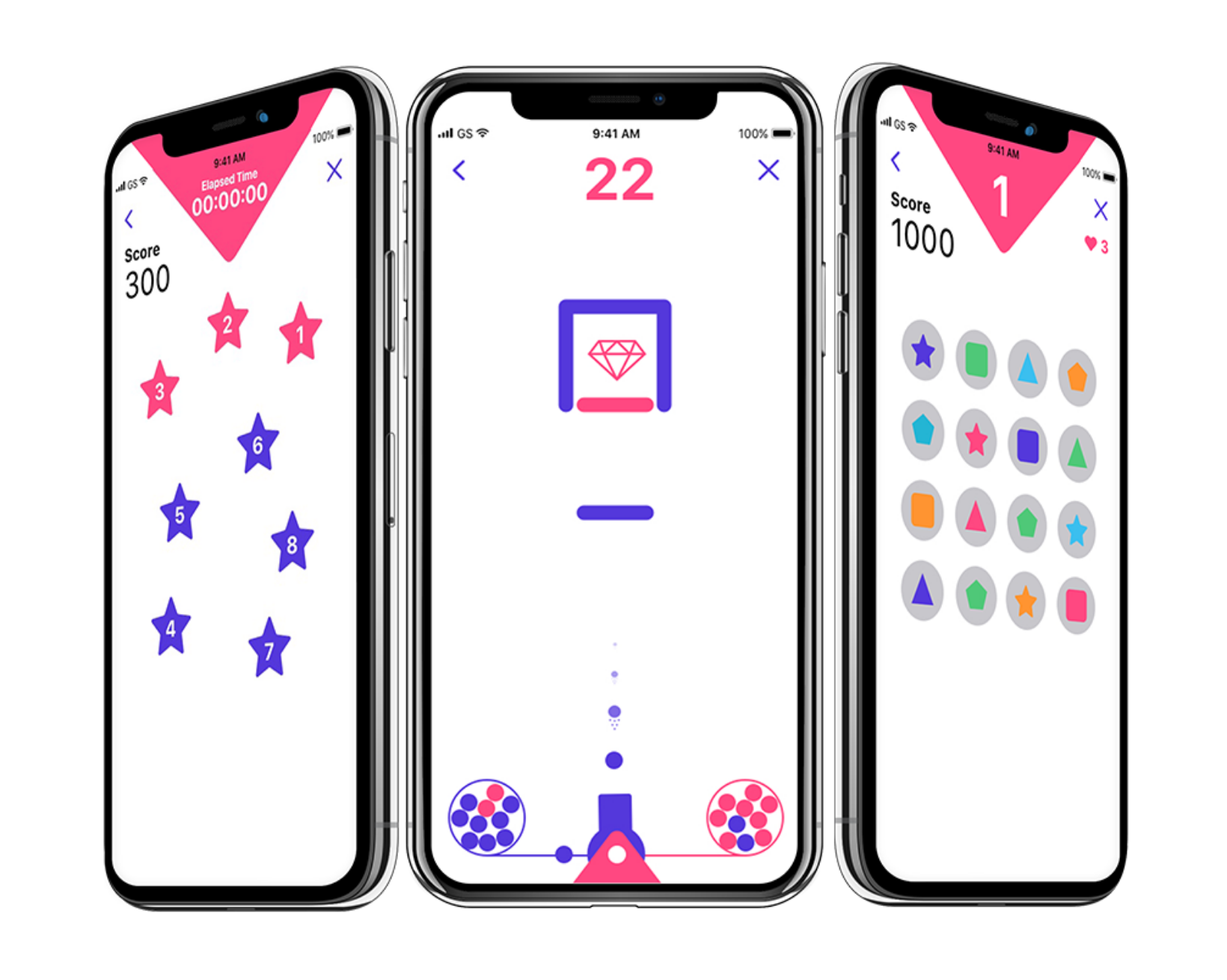
Gamification
Outcomes
Reduced onboarding friction, improving first-time user experience and accessibility
Accelerated time-to-engagement, enabling users to reach gameplay significantly faster
Improved clarity of user journey, supporting stronger comprehension and flow
Increased perceived value of participation, reinforcing the purpose behind user actions
Delivered a scalable, user-centred foundation to support ongoing engagement and data collection
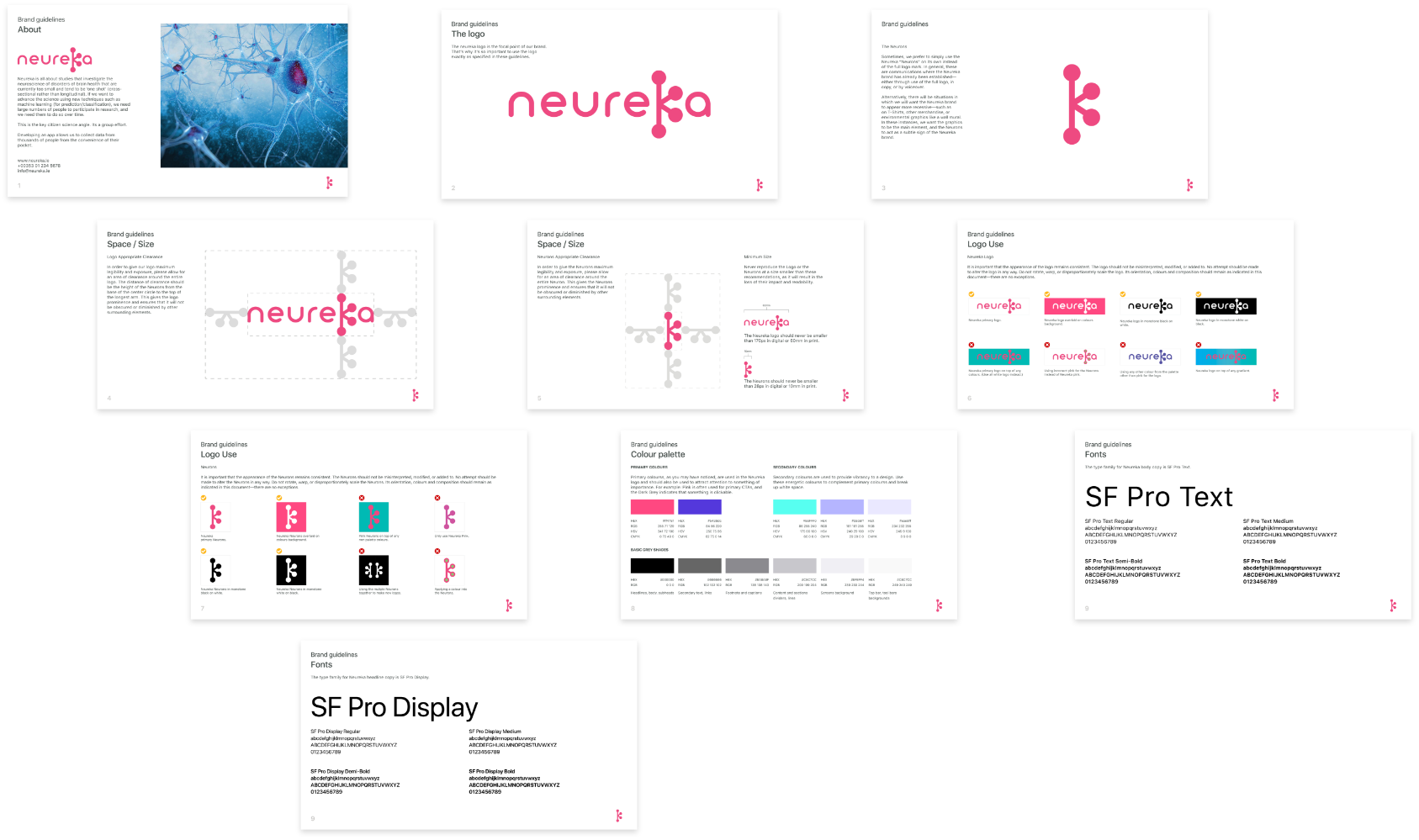
Branding
Conclusion
Neureka highlights the importance of designing for both engagement and purpose. In a product where user contribution underpins scientific progress, experience design plays a critical role in sustaining participation.
By simplifying interactions, reducing friction, and creating a more inviting and rewarding experience, the platform successfully bridges the gap between complex research objectives and everyday user behaviour.
For me, this project was particularly meaningful, demonstrating how thoughtful, user-centred design can contribute to outcomes that extend beyond the product itself and into wider societal impact.